
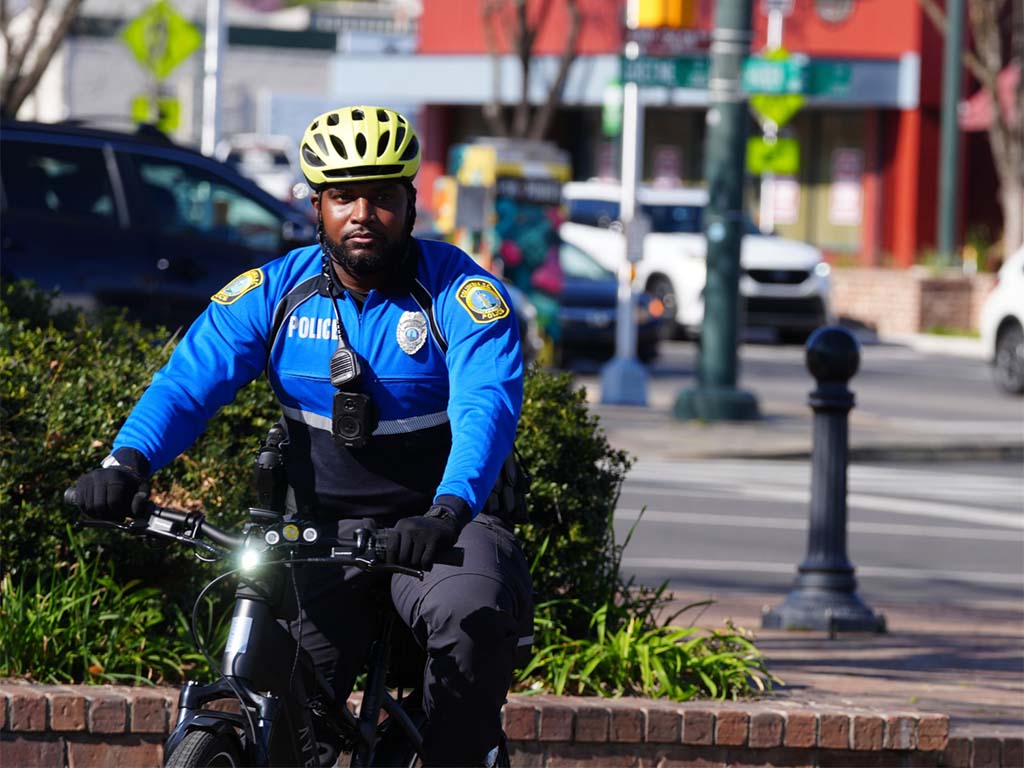
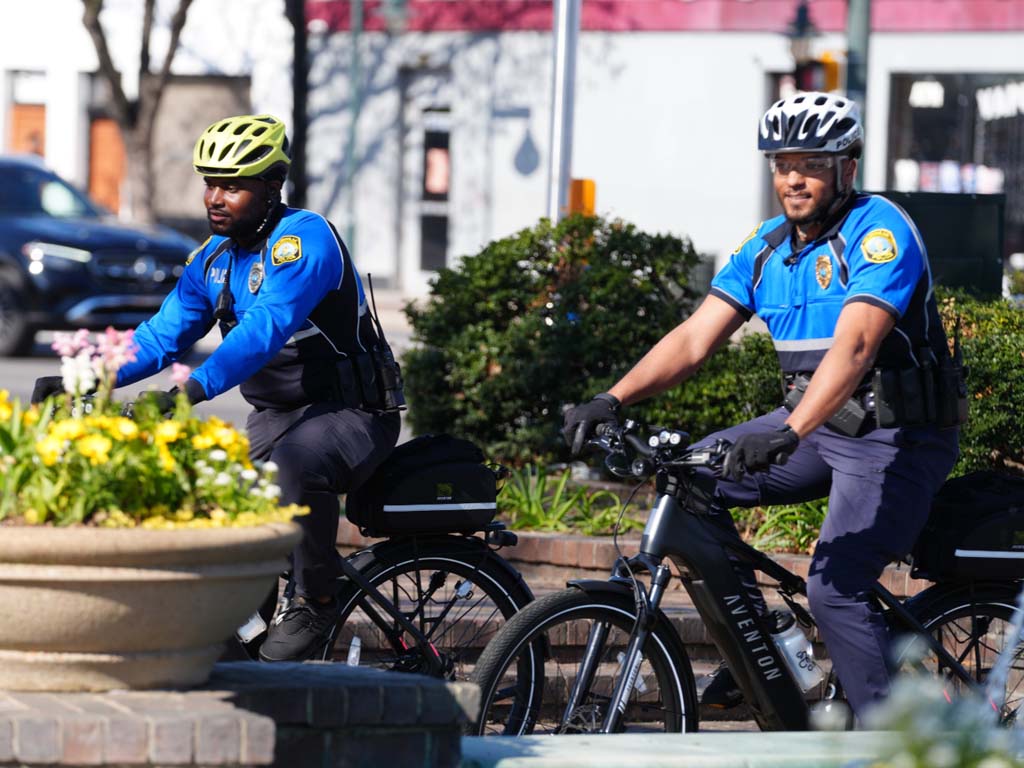
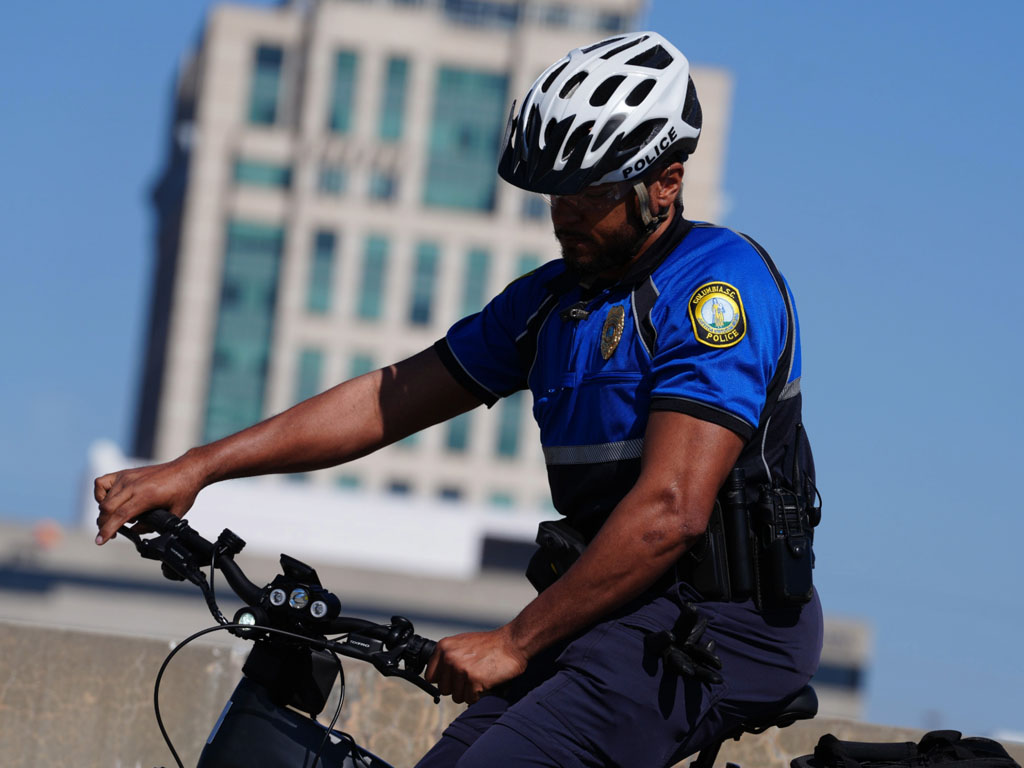
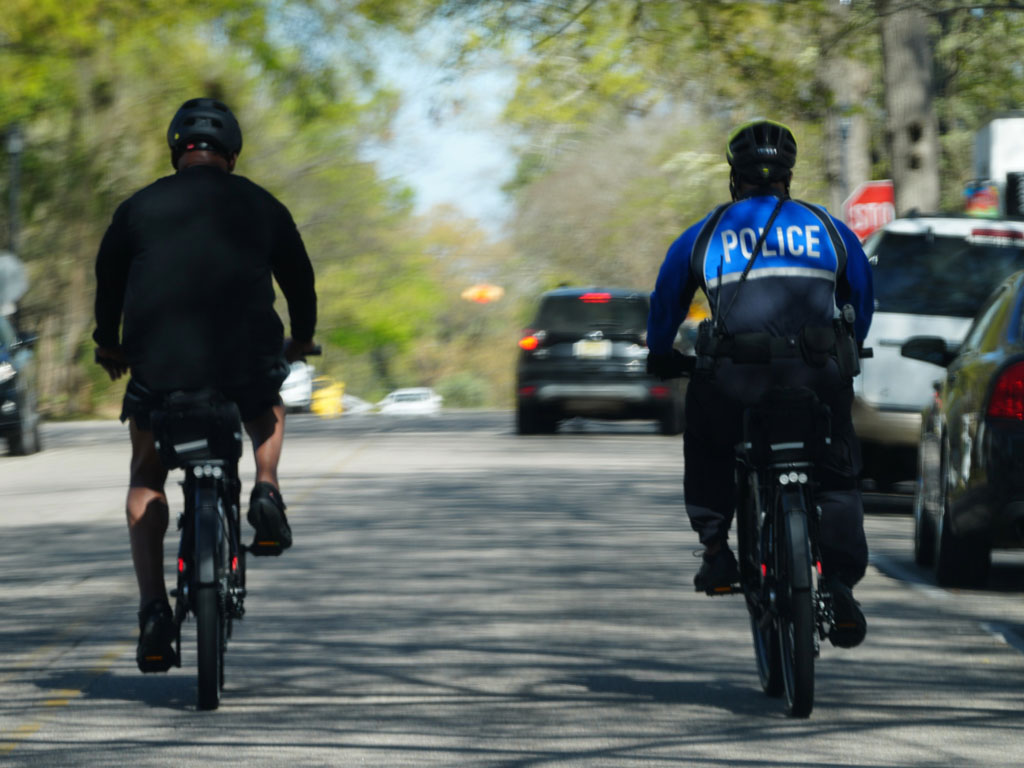
The Columbia Police Department’s E-Bike Patrol Unit represents the evolution of community policing by combining mobility, visibility, and accessibility to better serve residents and visitors. Designed to patrol parks, trails, entertainment districts, special events, and other high-traffic areas, e-bike officers can respond quickly while maintaining meaningful interactions with the community. By increasing officer presence in areas not easily accessible by traditional patrol vehicles, the unit enhances public safety, deters crime, and strengthens relationships through proactive engagement.
E-Bike Unit
What is an E-Bike?
Under South Carolina State Law (§56-1-10), an electric-assist bicycle (e-bike) is legally defined as a low-speed vehicle with two or three wheels, fully operable pedals, and an electric motor of no more than 750 watts (1 horsepower).
Important Law Enforcement Distinction: If an electric bike exceeds 750 watts or travels faster than its class limits via the motor, it is legally reclassified as a moped or motor vehicle under state law, requiring a driver’s license, registration, and regular traffic compliance.
How Do E-Bikes Benefit the Community?
For a community policing agency like CPD, e-bikes offer unique operational and public safety advantages:
- Enhanced Officer Approachability: Unlike patrol cars with rolled-up windows, e-bikes eliminate physical barriers. Officers can easily stop to speak with residents on their porches, shop owners downtown, or pedestrians, mirroring the goals of programs like the department’s annual Police, Parks & Pedals initiative.
- Tactical Access & Agility: Officers can seamlessly navigate tight alleyways, congested entertainment districts (like Five Points or the Vista), and crowded community events where a standard patrol car would get stuck in traffic.
- Proactive Crime Deterrence: E-bikes allow officers to patrol parking lots silently and efficiently, putting a quick stop to property crimes like auto break-ins before suspects even realize police are nearby.
- Environmental Stewardship: Utilizing electric patrol options significantly cuts down on carbon emissions and fuel costs, reducing the tax burden on Columbia residents.
- Enhanced community engagement, promotion of cardiovascular fitness among officers, and a stealthier approach to deterring and/or responding to criminal activity.
Why is the Department Introducing E-Bikes?
CPD utilizes bike and e-bike patrols to expand its reach and boost operational efficiency.
- Reducing Officer Fatigue: Standard bicycle patrol shifts are physically exhausting, especially during long summer deployments or when navigating steep terrain. E-bikes allow officers to cover up to 10 times the distance of a traditional bicycle while saving their energy for when they need to arrive on a scene focused, alert, and physically ready to assist.
- Extended Patrol Range & Speed: The electric assist allows rapid deployment across larger regional zones, bridging the gap between slow-moving foot patrols and fast but insulated vehicle patrols.
Where Can E-Bikes Be Operated?
Legally, e-bikes are treated like traditional bicycles under SC Code §56-5-3520, meaning they are allowed anywhere standard bikes go:
- Public Roadways: They can operate on public streets, staying as far to the right as practicable, riding with the flow of traffic, and obeying all standard traffic control devices.
- Designated Bike Lanes: E-bikes must utilize dedicated bike lanes when available, unless making a turn or avoiding hazards.
- Shared-Use Paths & Trails: Class 1 and Class 2 e-bikes are permitted on regional shared paths and greenways around Columbia, such as the Saluda Riverwalk, Riverfront Park Trail, and the Vista Greenway.
Are There Ordinances or City Policies with Restrictions?
Yes. It is critical to know local ordinances because municipalities hold the authority to restrict e-bike usage in specific public spaces:
- Sidewalk Restrictions: In crowded commercial and downtown areas of Columbia (including Main Street and parts of the University of South Carolina campus), riding bicycles or e-bikes on the sidewalk is strictly prohibited. They must remain on the roadway or in designated bike lanes. The downtown area encompasses Elmwood, Assembly, Gervais, and Sumter
- Controlled-Access Highways: E-bikes are completely banned from riding on interstates and high-speed controlled highways.
- Trail Limitations: While Class 1 and Class 2 e-bikes are widely accepted on city-managed paths, Class 3 e-bikes (28 mph) face heavy restrictions or complete bans on shared-use trails and unpaved state park paths due to safety concerns regarding high-speed encounters with pedestrians.
- Night Equipment Requirements: If operated after dark, city and state rules require the e-bike to have a front white lamp visible from 500 feet and a red rear reflector or light visible from 300 feet.
No bikes or e-bikes inside Finlay Park except for Police Bikes. Police bikes are legally classified as emergency vehicles.